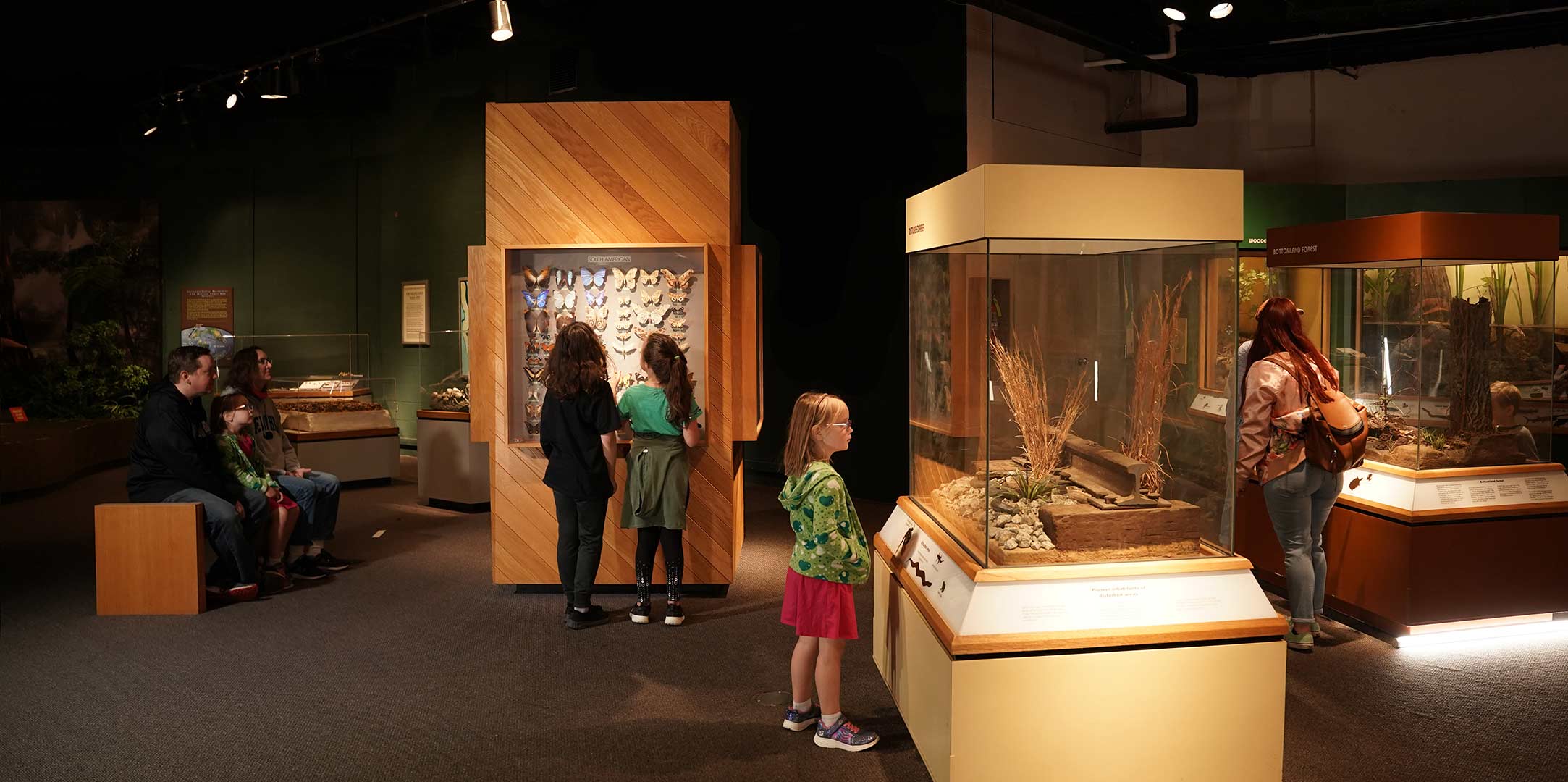
Summer heat is just a rumor as our staff seeks out the city’s best climate-controlled fun.
We at the Flyer have considered all the outdoors options for summer fun. We’ve jumped in the pools, kayaked the rivers, and taken those early morning walks in shady Overton Park. Sure, all of that was great, but what we really wanted was some honest-to-god air conditioning. So we fanned out over the city in search of those spaces where not even a whisper of the heat could be heard. Spaces where, when entering them, you feel like you’re diving into the coolest pool on earth, immersed in a frigid world all its own, even while staying completely dry. And, we learned, there are plenty of places to do just that, even as you learn a thing or two about golf, crafts, books, movies, and outer space. Come with us, then, as we journey into the heart of the great (and very chill) indoors.
Journey to the Stars
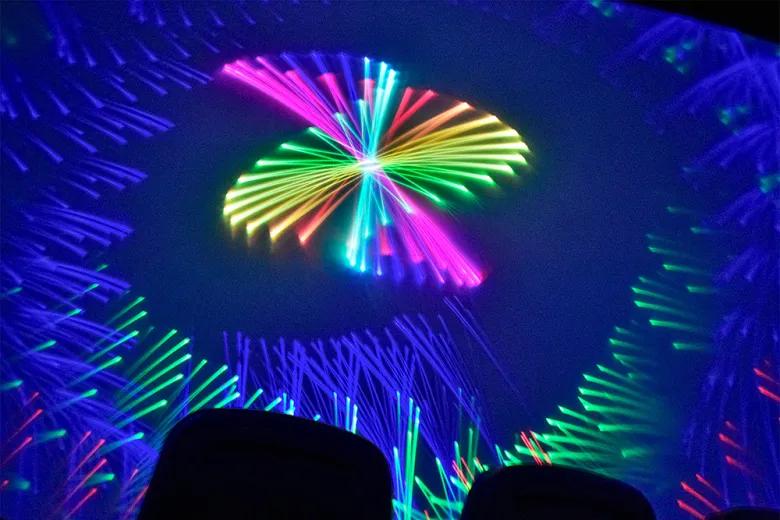
Outer space is very, very cold, and that’s just how I like it. When I hear that temps in interstellar regions approach absolute zero, I assume that’s referring to chilling vodka in the icebox. So it’s fitting that, as I step into the Memphis Museum of Science and History (MOSH), aka The Pink Palace Museum and Planetarium, on my way to their AutoZone Dome at the Sharpe Planetarium, I first savor the impeccably air-conditioned ambience. Leaving behind the stickiness of a Memphis summer day, I quickly relax into the inviting coolness, even more so once I enter the planetarium itself. It’s no wonder that MOSH has begun hosting bands there in their Laser Live series (with Lukah opening the season on July 11th). Or that the reliably fun laser shows set to classic albums continue to draw crowds.
It makes sense: the seats are angled back and extra cushiony, the acoustics are hushed, and the walls are round. They could host yoga or meditation classes in there, given the room’s mood of serenity.
Yet there’s a different sort of meditation in store for me when that day’s planetarium show actually begins. Under the dome, one is led to contemplate the vastness of the cosmos, the smallness of humanity, and, as the presentation Dark Side of Light makes clear, humanity’s hubris. Even before the show begins, when we’re asked to turn off our cell phones — because their screens would contradict the whole point of planetariums in the first place — we get a hint of how humanity’s illumination has made its impact. That’s even more apparent when we’re dwarfed by a projection of Earth’s dark side as seen from space: our species has filled most of the land mass with 24-hour light. And thus are all organisms’ biological rhythms of day and night disrupted, even as artificial light disrupts our view of the night sky’s grandeur.
Humans, the narrator says, have largely forgotten what it’s like to see the belt of the Milky Way (the glowing center of our own galaxy) stretching from horizon to horizon. Indeed, city dwellers may never “remember” what that looks like until they visit a planetarium, which can simulate a perfect moonless night in the country, or even time-travel to reveal the darkness of a world before electricity.
Dark Side of Light completes its run by press time (returning again in the future), but there’s always the upcoming Mars: The Ultimate Voyage. Each presentation also includes a “star talk,” a walk through current highlights of the night sky over Memphis, like Jupiter dancing with Castor and Pollux, or how to find the constellation Boötes, which you can pronounce any way you like, but really looks like a giant ice cream cone in the sky. Mmm, ice cream at absolute zero … now that’s a fun summer escape! — Alex Greene